Meet Elizabeth Proctor: New Faculty Member in the Department of Neurology
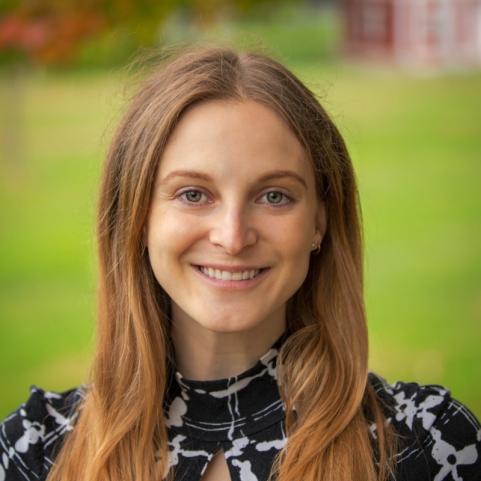
Dr. Elizabeth Proctor, Associate Professor and Vice Chair for Research of Neurology at UVA, joined the Department of Neurology in 2025. She shared with us about her research and her background.
Brain Institute: Briefly describe your current research projects and interests.
Our lab’s primary work is in defining the mechanisms of Alzheimer’s disease risk, onset, and progression. We view disease as a complex system, with many interacting parts, and these interactions come together to present in very specific dysfunctions at multiple scales: molecular, cellular, tissue physiology, global brain neural circuitry, and cognition. It’s difficult to unravel mechanisms of disease by examining individual parts of the pathology; there are always “offscreen” players making contributions that go unrecognized, as the Alzheimer’s disease field has famously realized over the past two decades. In our current work, we are fascinated by the interactions between the process of aging and the accumulation of Alzheimer’s disease risk factors, compounded over the course of a lifetime. We aim to understand the unique brain environment created by these interactions and how they create vulnerability in the complex system that is the brain.
How does your research connect with the field of neuroscience?
While we study mainly Alzheimer’s disease, we are broadly interested in the brain and how the physiological functions of the “wetware” result in smooth operation of the “software” – cognition. The best way to figure out how a complex system works is to study all the different ways in which it can break: in the case of the brain, neurological disorders. We use tools like multi-omics, functional neuroimaging, 3D extracellular flux analysis, confocal and light sheet microscopy, and computational modeling in disease systems spanning primary and iPSC-derived cell cultures, organoids, mouse models, and human subjects. Our multi-disciplinary group comprises many different scientific backgrounds and interests, and our toolsets of methods and models have grown over the years to meet these needs.
Why did you decide to come to UVA?
I came to UVA because of the perfect niche for my lab’s work, created by the overlap of institutional excellence in the three fields I consider my home(s): neuroimmunology, systems biology, and neurodegeneration. Getting to meet (and work with!) people whose papers I’ve been reading for years has been a dream come true, and the sense of community here is amazing.
What’s the best part about your job?
The best part of my job is that I can just keep asking questions, forever. As long as I can convince my lab members and funding agencies that my questions will have interesting answers, I get to be full-time creatively curious for the rest of my life, and I get to do it with colleagues who are just as excited about the process as I am. Academia is particularly special because I get to help trainees discover what they’re most curious and excited about, and help them build their futures around that.
What led you to a career in science and neuroscience?
I’ve wanted to be a scientist since I was 8 years old, when a teacher told me that a job existed that was just to ask questions and learn new things about the world. I settled on a physics major in college, because it seemed like I could go anywhere from there. My first research experiences were in astrophysics, but by the time I decided to go for a PhD I had discovered the complexity of the physics of biological systems and was hooked. I started out at the level of atoms, using computational methods to study how large biomolecules move, change conformations, and come together to form complexes, and ultimately landed in the protein aggregation field, the topic of my PhD thesis. From there it was an easy jump to studying neurodegenerative disease, but rather than stay in my lane of expertise I’ve followed my and my lab members’ “why” questions wherever they led, which have landed us bridging scales of the brain from glial biology to whole-brain neural circuitry to cerebrovascular function to interactions with systemic physiology.
What advice do you have for trainees?
First, go to seminars, even if they seem only peripherally relevant to your current work. I can identify three occasions on which attending a seminar well outside of my direct area of research has literally changed my life, taking a complete right-angle turn and opening whole worlds of new opportunities.
Second, follow where your science leads you. Every line of inquiry will open more questions than it answers, and there is no objectively right choice for where to go next. Just follow what you find the most interesting. Sometimes the path is meandering, but if you’re asking interesting questions, the answers are bound to be interesting, too, plus you’ll be engaged and motivated in your work and maybe learn some new skills in the process.
What’s something new that you’ve learned recently (at work or outside of work)?
Octopuses have blue blood because the heme in their blood binds copper instead of iron like ours. But copper doesn’t do as good a job as iron of transporting the oxygen, so octopuses need 3 hearts to circulate blood efficiently enough to fuel their muscles and brains. Two of the hearts pump blood to the gills, and the third pumps blood to the rest of the body. When they swim, the heart that pumps blood to the body stops beating because it can’t pump effectively due to the strain that the intense muscle contraction puts on the body.
Where are you from originally?
I grew up in the Chicago suburbs, and that’s where nearly all of my (large) family still lives. It’s a little lonely being “the one who left,” but I’ve really enjoyed all the places I’ve lived, all for different reasons, and I wouldn’t change a thing.
What’s your favorite way to spend a day off?
I have an extremely energetic 5-year-old, so there really aren’t any actual days off at the moment. In the past (and hopefully some day in the future), I would spend days off either curled up on the couch with a book or outside moving my body: trail running, road cycling, rock climbing, and pole vaulting are favorites. For vacations, I love going with my family to the beach or the mountains; we enjoy swimming, hiking, and being complete hazards once every couple years when we attempt to ski (or maybe that’s just me).
What is a surefire way to make you laugh?
Honestly it’s far too easy. I have a very low threshold and it’s occasionally a problem, so I’m not going to give any additional ammunition here.