Meet Merry Mani: Associate Professor, Radiology and Imaging Sciences and Biomedical Engineering
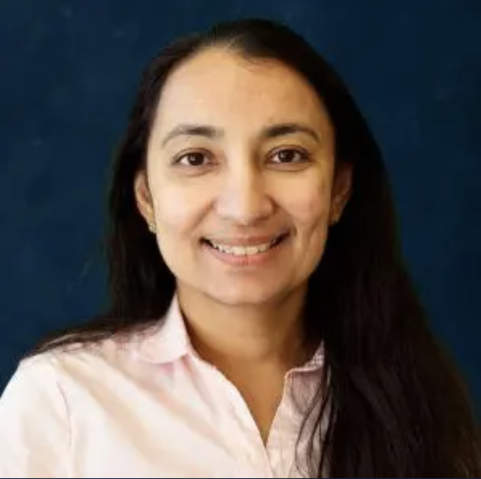
Dr. Merry Mani is a pioneering researcher in biomedical imaging, dedicated to advancing our understanding of the human brain through innovative approaches. Her work focuses on developing next-generation imaging technologies that enhance the performance of non-invasive MRI-based imaging by leveraging advancements in hardware design and sophisticated signal processing techniques. She shared with us about her research and her background.
Brain Institute: Briefly describe your current research projects and interests.
My research focuses on advanced MRI techniques to probe the microstructural changes in the brain. I’m particularly interested in characterizing neurological changes in the context of disorders such as Huntington’s, Alzheimer’s, Epilepsy, Mild Traumatic Brain Injury, Parkinson’s, Multiple sclerosis, Major depressive disorder, Bipolar disorder etc. We develop novel pulse sequences with high resolving power and novel reconstruction and analysis methods to enable the detection of subtle neurological changes in-vivo. Broadly, my work aims to improve quantitative MRI tools that reveal subtle physiological processes relevant to brain health and disease.
How does your research connect with the field of neuroscience?
I develop MRI methods that turn complex neural physiology into measurable, quantitative signals. By improving MRI’s sensitivity to microstructure, my work offers noninvasive readouts of white‑matter organization, glial–neuronal interactions, and waste‑clearance pathways. These tools help neuroscientists test hypotheses about brain development and disease, bridging imaging physics with fundamental questions in brain health.
Why did you decide to come to UVA?
One of the attractions was the long-standing strength in MRI technique development - an environment where innovative ideas in imaging can flourish. UVA has also made unique and influential contributions to neuroscience, making it an ideal place to bridge technical MRI advances with impactful questions in brain science.
What’s the best part about your job?
What I enjoy most is discovering how a real-life neurobiology problem suddenly becomes tractable because of a math identity or a quirk of MR physics. I’m not a perfect expert in any of those fields, but I’ve become fluent enough to move between them and make them talk to each other. That role of being the mediator makes the work rewarding.
What led you to a career in science and neuroscience?
As a student, I often felt torn between two strong pulls: I loved biology with my conscious mind, yet my grades made it clear that I was more naturally aligned with physics or mathematics. For a long time, I assumed these were entirely separate paths and that choosing one meant saying goodbye to the other. When I chose electrical engineering as an undergraduate, I genuinely believed I was closing the door on biology. What I didn’t realize was that medical imaging would bring me exactly to where I wanted to be. The biological questions motivate me, and the quantitative skills allow me to develop solutions in a way that feels deeply satisfying.
What advice do you have for trainees?
Learn the fundamentals so you can bend them creatively. Many of the most impactful advances in science come from people who know the rules well enough to see how and when they can be reimagined.
What’s something new that you’ve learned recently (at work or outside of work)?
At work, I’ve been refining strategies to boost MRI sensitivity for measuring extremely slow flow in the brain to capture the subtle signals needed to study glymphatic dynamics in the human brain. I’ve been diving into how sleep modulates glymphatic function. It’s been eye-opening to connect something as routine as sleep to the brain’s waste-clearance system.
Where are you from originally?
I am originally from Kerala, India: a place known for its lush greenery, coastal landscapes, and a deep appreciation for education and science.
What’s your favorite way to spend a day off?
Simple things that reset my attention and energy: connecting with family and friends, giving myself a little time for quiet reflection, and spending a few unhurried hours thinking, reading, or walking.
What is a surefire way to make you laugh?
It doesn’t take much! Everyday moments, small absurdities…