Meet Tanya Evans: UVA Brain Institute Co-Director
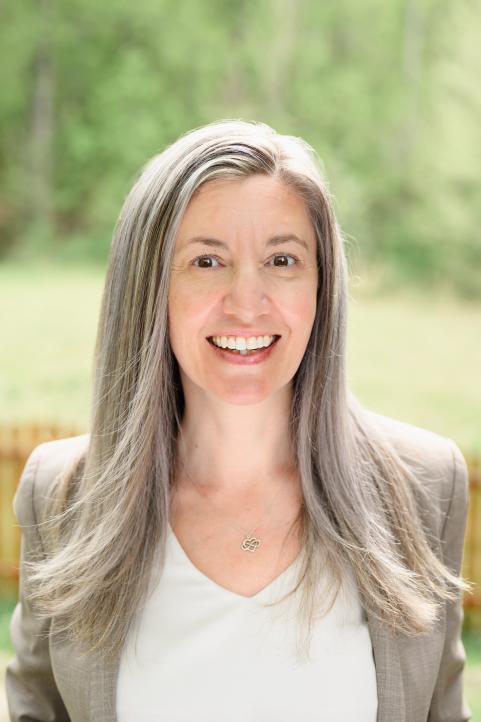
Tanya Evans joins the Brain Institute as Co-Director, where she will work on initiatives to enhance collaboration and deepen engagement across UVA’s neuroscience community.
In the following Q&A, she shares what excites her most about this position.
What are you most excited about in your new role with the Brain Institute?
Without a doubt, I’m most excited about the opportunity to connect more broadly with individuals across the neuroscience community at UVA! It’s essential to foster an open dialogue between the Brain Institute and the growing community we support.
The Brain Institute team is always happy to address any questions you may have about our past and future initiatives, and we will continue to gather your ideas on our focus and processes moving forward.
Stay tuned for opportunities to engage, and please don’t hesitate to reach out anytime!
Where would you like to see neuroscience research at UVA go in the next 5, 10, 20 years? How can the Brain Institute help realize your vision?
I believe the vanguards in neuroscience research over the next two decades, both at UVA and in the broader scientific community, will be those who adeptly employ a team science approach to translational science and leverage the diverse skill sets of researchers from various disciplines.
One of the main challenges in achieving this vision is the incentive and promotion structure within academia, which requires researchers to demonstrate their individual achievements in scholarship. Additionally, there are logistical hurdles, such as supporting faculty, staff, and students whose work spans multiple schools at UVA and other universities.
I recall that early in his tenure as UVA President, Jim Ryan asked faculty what he could do to eliminate barriers to interdisciplinary scholarship. He was genuinely open to our feedback, and I have since observed progress in several areas. Pan-university teams, like those in the Brain Institute, are ideally positioned to lead this progress.
You participate in regular and productive collaborations; what advice do you have for researchers who would like to collaborate more, especially across disciplines or the basic-translational-clinical-population research spectrum?
Step outside your comfort zone—both literally and figuratively. Seek out opportunities to place yourself in spaces where you can engage with people whose work differs markedly from your own, and keep an open mind when you arrive. Every discipline has its own language, and learning to communicate across these boundaries takes time and intention.
I am deeply grateful for my training: in an interdisciplinary neuroscience graduate program at Georgetown, in a Stanford lab that integrates a methods-development team with a team applying those methods, and in the translational science–focused iTHRIV Scholars program at UVA. I have been fortunate to work with brilliant mentors who recognized the value of team science well before formal programs like these existed. Training that spans the basic-translational-clinical-population research continuum not only broadens perspective but also facilitates meaningful connections and collaborations among faculty mentors and trainees—enabling research questions and methodological approaches that no single laboratory could support on its own.
Briefly describe your current research projects and interests. How did you get your start in the field of neuroscience?
My research examines how brain development across the lifespan supports the acquisition and maintenance of school readiness skills. In collaboration with researchers at the Center for Healthy Brain Development, I integrate methods from neuroscience, education, psychology, biology, medicine, and data science to understand how early identification and intervention can optimize developmental outcomes. Driven by a love of math and science, I pursued an undergraduate degree in engineering, followed by doctoral training in neuroscience with the goal of advancing our understanding of the brain’s incredible capacity to learn.
What’s something new that you’ve learned recently (at work or outside of work)?
I recently learned the technical components of a layup. Despite never competing in team sports myself, I recently took a big step out of my comfort zone by serving as assistant coach of my son’s basketball team. Luckily, the youth sports community in Charlottesville is incredibly supportive in training children - and parents - as they acquire new skills. Meanwhile, my daughter is begging me to join her in horseback riding lessons, so I am desperately trying to conquer my fear of injury and hop on a horse. Stay tuned.
What is a surefire way to make you laugh?
Most definitely through dry humor and sarcasm. My husband is from England, and our lab manager is from New Zealand, so the three of us are constantly cracking jokes with straight faces, sometimes wondering why nobody is laughing. I also appreciate the subtle humor interspersed throughout children’s movies. Those filmmakers certainly understand that their audience includes parents as well.